
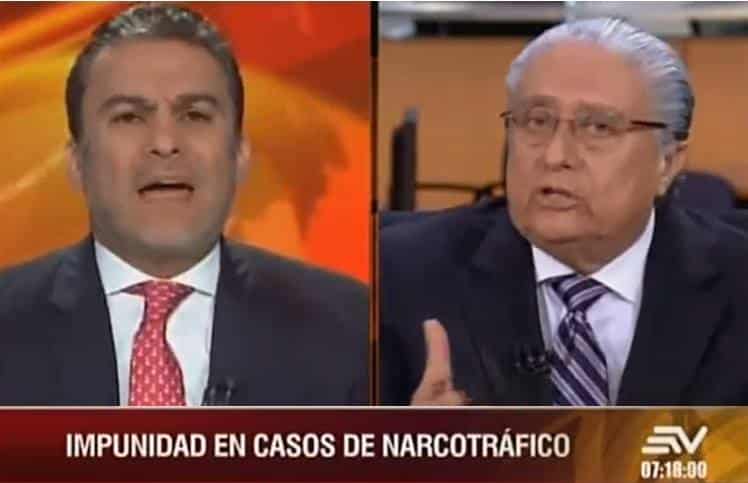
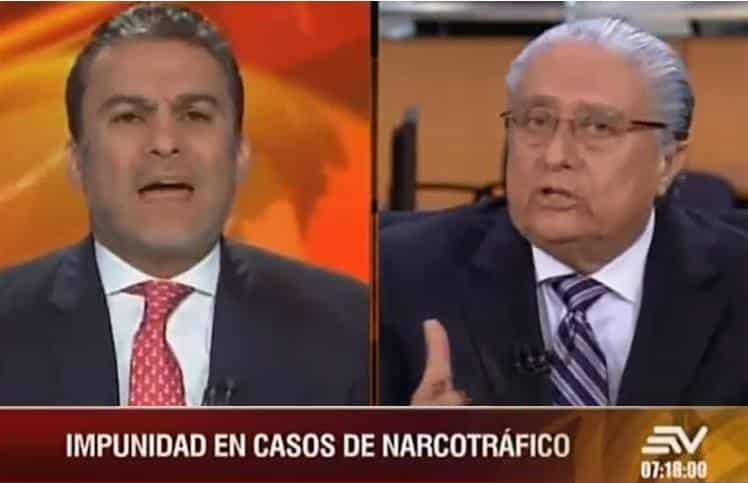
Sin un proceso previo y en cuestión de horas, la Superintendencia de la Información y Comunicación (Supercom) emitió este 23 de junio un llamado de atención a la estación televisiva Ecuavisa por “efectuar constantes interrupciones”, por parte del entrevistador Alfredo Pinoargote, al Ministro del Interior, José Serrano, quien acudió al canal para pedir una réplica por unas declaraciones que, según el funcionario, se tergiversaron respecto a los procesos por narcotráfico. El escrito, firmado por el superintendente Carlos Ochoa, advirtió al medio de poner en riesgo el ejercicio de los derechos de la comunicación y le pidió mejorar sus prácticas comunicacionales. La medida se basó en el artículo 57 de la Ley Orgánica de Comunicación referente a que la Supercom podrá realizar amonestaciones a los administrados para llamar la atención sobre prácticas que deben ser mejoradas.
Según el Superintendente, Pinoargote, desde su espacio de entrevistas En Contacto Directo, “no permitió concluir los argumentos expuestos por el funcionario, cortando su intervención en varias ocasiones durante la entrevista y al final de ella, sobreponiendo incluso videos mientras hacía uso de la palabra” En su escrito, Ochoa aseveró que, “el entrevistador con su proceder se ubica en una posición privilegiada que convierte a esta actitud comunicacional en un método inadecuado cuyo objetivo es imponer su criterio, propendiendo incluso a desprestigiar a su entrevistado” y que esta actuación “se aleja de los fines constitucionales que se derivan del reconocimiento de los derechos de la información y comunicación…” .
En la mañana del 23 de junio, Serrano acudió al espacio de entrevistas a dar su réplica para aclarar, según el funcionario, la información que habría tergiversado Pinoargote al señalar que solo el 3% de procesos de narcotráfico tienen sentencia, cuando, según Serrano, lo que dijo fue que el 3% de los procesos que tienen sentencia en narcotráfico, tienen decomiso de bienes. En esta entrevista de “réplica”, el entrevistador presentó el vídeo donde se ratifica que el Ministro afirmó lo señalado en el canal. En medio de la entrevista se produjeron altercados, en donde tanto entrevistador como entrevistado hablaron al mismo tiempo, dificultando el entendimiento de lo que ambos expresaban. Serrano acusó al entrevistador de que la idea de Pinoargote es llegar al final de la entrevista sin que pueda entregar información a los ciudadanos y le pidió que lo deje hablar, a lo que Pinoargote respondió que “puede hablar pero no puede venir a contestar una cosa, diciendo que yo he manipulado, cuando no he manipulado nada”.
Esta es la segunda ocasión que la Supercom amonesta a un medio sin un proceso previo. Antes (septiembre de 2015) ya lo hizo con este mismo canal, por el programa Ecuador tiene talento, durante la participación del grupo de “Las chicas miau”, quienes tuvieron una pelea durante su intervención.
Superintendent admonishes interviewer for «constantly interrupting» Interior Minister
Without prior proceedings and in a matter of hours, the Superintendency of Information and Communications (Supercom) issued on 23 June an admonishment against television station Ecuavisa for «the constant interruptions» by interviewer Alfredo Pinoargote, of the Interior Minister, José Serrano, who went to the station to reply to statements that, according to the official, were distorted regarding processes for drug trafficking. The written caution, signed by Superintendent Carlos Ochoa, warned the media outlet it was putting at risk the exercise of communication rights and requested that it should improve its communication practices. The measure was based on Article 57 of the Organic Communications Law, which states that Supercom may issue admonishments to draw attention to practices that should be improved.
According to the Superintendent, Pinoargote, during the interview in En Contacto Directo, «did not allow the official to conclude his arguments, interrupting his intervention several times during the interview and at the end of it, even superimposing video recordings while he was speaking». In his statement, Ochoa asserted that «the interviewer, through his conduct, places himself in a privileged position that turns this communicational attitude into an inappropriate method that aims to impose his criteria, tending even to discredit his interviewee» and that this conduct «moves away from the constitutional purposes derived from the recognition of the rights of information and communication…«.
On the morning of 23 June, Serrano attended the interview program to issue his reply to clarify, according to the official, the information that Pinoargote had distorted by stating that only 3% of processes for drug trafficking end in a sentence, when, according to Serrano, what he had said was that 3% of the processes that end in a sentence for drug trafficking involve the confiscation of property. In this «reply» interview, the interviewer showed the video that confirms that the Minister had said what the TV station had stated. Some altercations occurred during the interview, with interviewer and interviewee speaking at the same time, making it difficult to understand what they were both saying. Serrano accused Pinoargote of wanting to reach the end of the interview without allowing the official to deliver information to the public and asked him to let him talk, to which Pinoargote replied «you may talk but you may not come to reply to something, saying I have manipulated, when I have not manipulated anything«
This is the second time that Supercom cautions a media outlet without a prior process. It did it before (September 2015) with this same TV station, because of the program Ecuador has talent, and the participation of the group «Las chicas miau», who fought among themselves during their intervention.